
How to Choose a Canadian Customs Broker (2026 Guide for Cross-Border Shippers)
When shipping freight between Canada, the U.S., and Mexico, customs brokerage is not just a compliance step—it is a critical control point in your supply chain performance.Delays at the border, incorrect HS classification, or missing documentation can quickly turn a profitable shipment into a costly disruption.That’s why selecting the right Canadian customs broker is one of the most strategic decisions for importers and exporters operating in North American trade lanes.
This guide explains how to evaluate providers, what “good” actually looks like in practice, and how leading logistics networks integrate brokerage into end-to-end freight solutions.
What Does a Canadian Customs Broker Actually Do?
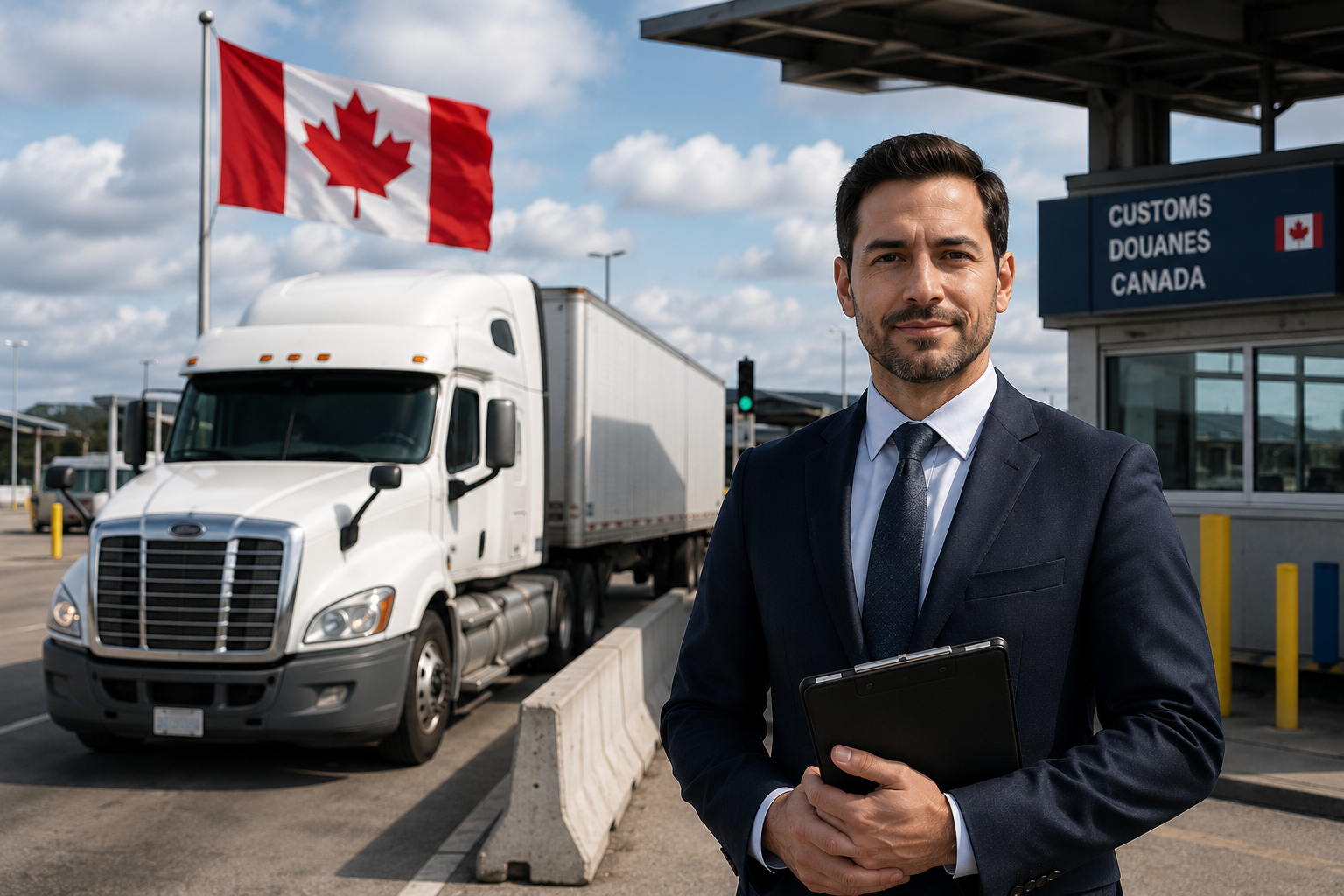
A Canadian customs broker acts as the official intermediary between importers and the Canada Border Services Agency (CBSA). Their core responsibility is to ensure goods entering Canada are:
- Correctly classified under HS codes
- Properly valued for duties and taxes
- Accompanied by complete import documentation
- Compliant with Canadian import regulations
However, in modern cross-border logistics, brokerage has evolved beyond paperwork. Today, the best brokers function as trade compliance partners, helping companies reduce risk, accelerate clearance times, and integrate customs processes directly into transportation flows.
Criteria for Choosing a Canadian Customs Broker
Not all customs brokers offer the same value. The strongest partners combine compliance expertise, cross-border experience, and logistics integration to keep freight moving efficiently across Canada, the U.S., and Mexico.
Cross-Border Expertise
Look for a provider with experience across Canada, the U.S., and Mexico, not just one country. This helps prevent delays caused by documentation requirements and differing customs regulations.
Industry Knowledge
A customs broker should understand your industry, whether automotive, industrial manufacturing, retail, food products, chemicals, or consumer goods, to ensure proper classification and compliance.
Integrated Logistics
The most efficient providers combine customs brokerage, transportation, warehousing, and distribution services into a single coordinated operation, reducing handoffs and delays.
Compliance Strength
Strong compliance processes help minimize inspections, penalties, shipment holds, and unexpected costs while maintaining smooth cross-border operations.
Visibility & Communication
Choose a broker that provides proactive shipment updates, document review support, and clear communication before freight reaches the border.
Technology & Automation
Modern customs brokerage should include digital documentation, EDI connectivity, shipment visibility tools, and automated compliance processes.
Why More Shippers Are Choosing Integrated Providers
Many companies still manage separate carriers, warehouses, and customs brokers. Increasingly, however, shippers are choosing integrated providers such as Mexicom, which combines freight transportation, Canadian customs brokerage, warehousing, and door-to-door logistics services across Canada, the United States, and Mexico. The result is fewer handoffs, greater visibility, and improved supply chain efficiency.
Why Choosing the Right Customs Broker Matters
For companies moving freight across Mexico–U.S.–Canada corridors, customs brokerage impacts:
- Border dwell time (hours or days lost at clearance)
- Total landed cost accuracy
- Supply chain predictability
- Customer delivery performance
- Compliance risk exposure
A weak brokerage partner creates fragmentation between transportation and customs. A strong one creates continuity across borders.
The CBSA Assessment and Revenue Management initiative represents a structural change in Canadian customs administration. It redefines how financial responsibility, compliance ownership, and operational execution are distributed across the import lifecycle.
Key Criteria for Choosing a Customs Broker in Canada
1. Cross-Border Expertise (Not Just Canada)
Many brokers operate only within Canada. However, for North American supply chains, you need expertise across all three countries.
Look for brokers who understand:
- U.S. Customs (CBP) processes
- Mexican import/export documentation
- Tri-national trade flows and routing
This is especially important for door-to-door freight between Mexico, the U.S., and Canada.
2. Industry-Specific Knowledge
Not all freight is treated equally. A strong broker should understand:
- Automotive supply chains
- Retail and e-commerce imports
- Industrial machinery
- Food-grade or regulated goods
- Time-sensitive freight (just-in-time manufacturing)
Industry knowledge reduces classification errors and avoids unnecessary inspections.
3. Integration With Transportation (End-to-End Visibility)
The most advanced brokerage setups are integrated into logistics networks.
Instead of treating customs as a separate service, leading providers combine:
- Freight transportation
- Warehousing and consolidation
- Customs clearance
- Final delivery
This creates fewer handoffs and better control over border transitions.
4. Compliance Accuracy and Risk Management
A high-performing customs broker should actively reduce risk by ensuring:
- Correct HS code classification
- Proper valuation and origin declarations
- Trade agreement utilization (CUSMA/USMCA)
- Audit readiness
Errors here can lead to penalties, shipment holds, or reputational damage with customs authorities.
5. Communication and Proactive Updates
One of the most overlooked criteria is communication quality.
A strong broker provides:
- Pre-clearance visibility
- Real-time issue escalation
- Document correction support
- Proactive alerts on regulatory changes
6. Technology and Digital Filing Capability
Modern customs brokerage should include:
- Electronic data interchange (EDI) with CBSA
- Automated document validation
- Shipment tracking integration
- Centralized compliance records
If a provider is still heavily manual, scalability becomes a risk.
Customs Broker Selection Checklist (Canada)
Use this checklist to quickly validate whether a customs broker is suitable for cross-border operations between Canada, the U.S., and Mexico.
Choosing the Right Model: Broker vs Integrated Logistics Provider
A key decision shippers face is whether to work with:
Traditional Customs Broker
- Focused only on clearance
- Separate from transportation
- Multiple vendors involved
Integrated Logistics Provider
- Freight + brokerage + warehousing
- Unified visibility across borders
- Fewer operational handoffs
For companies shipping regularly between Canada, the U.S., and Mexico, the second model often reduces delays and improves control.
Where Mexicom Group Fits In
For shippers operating in North American corridors, an increasingly relevant model is working with asset-based logistics providers that also include customs brokerage capabilities.
Mexicom Group operates within this structure by combining:
- Door-to-door freight transportation between Mexico, the U.S., and Canada
- Customs brokerage services in Canada
- Warehousing and cross-docking in key border hubs (including Laredo)
- Integrated operational control across the supply chain
This type of setup reduces fragmentation between carriers and brokers, especially for companies managing high-volume or time-sensitive cross-border freight.
Common Mistakes When Choosing a Customs Broker
Many shippers make the same errors:
- Choosing based only on price
- Working with brokers who only operate in one country
- Not verifying compliance capabilities
- Separating brokerage from transportation providers
- Lack of visibility into clearance delays
The result is usually hidden costs, delays, and reactive problem-solving at the border.
FAQ: Choosing a Customs Broker in Canada
What is the best customs broker in Canada?
The best customs broker is not defined by size, but by integration, compliance accuracy, and cross-border expertise. For companies operating across North America, brokers connected to logistics networks often provide better performance than standalone providers.
Do I need a customs broker to import into Canada?
Yes. Most commercial imports require clearance through the Canada Border Services Agency (CBSA), which is typically handled by a licensed customs broker.
Can one provider handle Canada, U.S., and Mexico customs?
Yes, but only some providers operate across all three jurisdictions. Integrated logistics companies are more likely to offer this capability.
What is the biggest risk when choosing a customs broker?
The biggest risk is lack of coordination between transportation and customs, which leads to delays, penalties, and inconsistent documentation.