![[Video] How the English Language Rule Is Disrupting Mexico-U.S. Trucking](https://mexicomlogistics.com/wp-content/uploads/bfi_thumb/dummy-transparent-rg1talotd8i7qlckvil21f1xub3taei9ilmlxjaz08.png "[Video] How the English Language Rule Is Disrupting Mexico-U.S. Trucking")
[Video] How the English Language Rule Is Disrupting Mexico-U.S. Trucking
Understanding the English Proficiency Rule and Its Revival
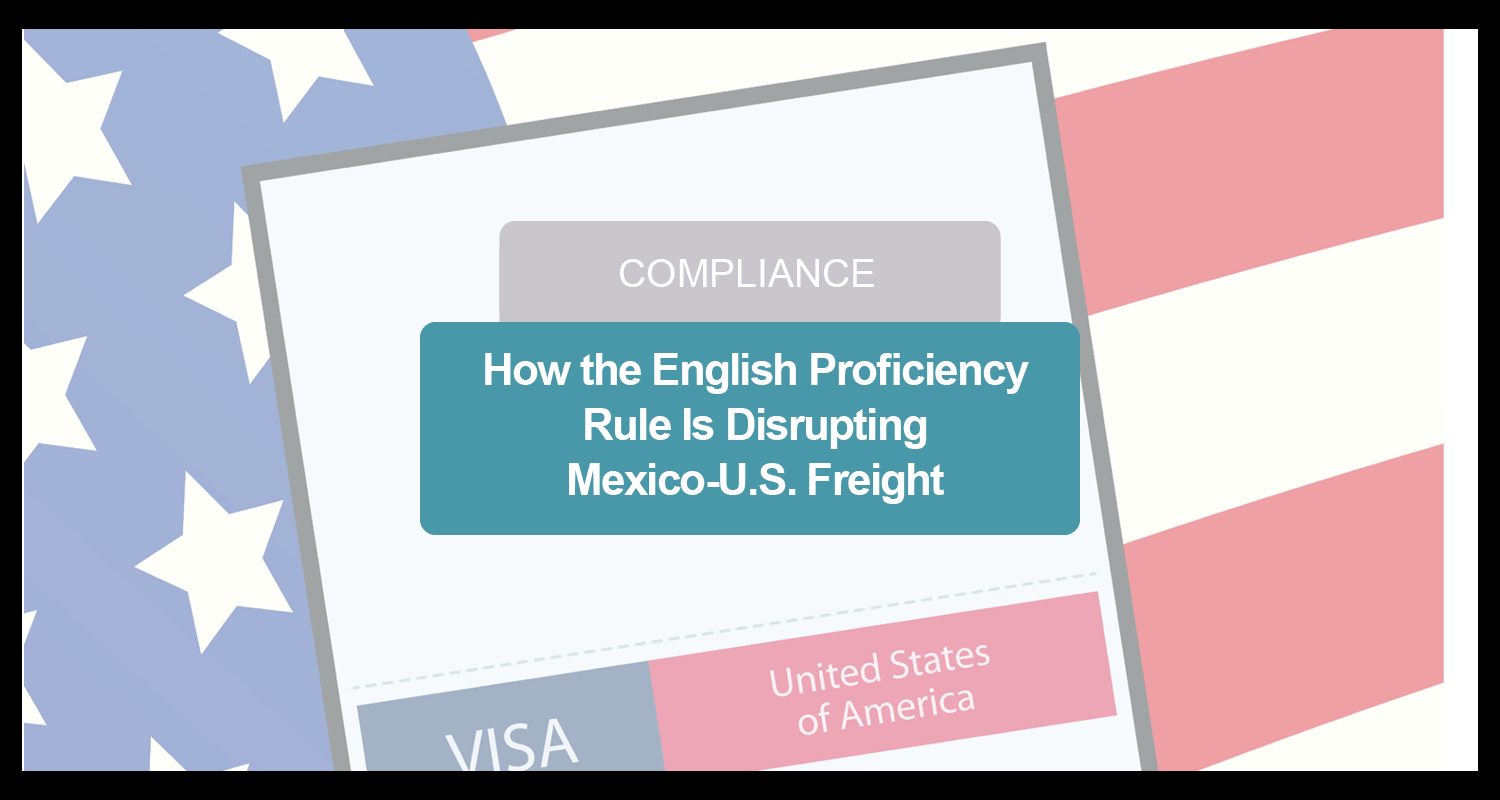
In June 2025, U.S. authorities began rigorously enforcing a long-standing rule requiring commercial drivers to demonstrate English proficiency. Although this regulation has existed since the 1970s, it was relaxed in 2016 under the Obama administration, allowing for the use of interpreters, translation apps, and cue cards. The current policy ends those allowances.
Now, roadside inspections and traffic stops must be conducted exclusively in English. If a driver struggles to understand instructions, they are given an English Language Proficiency (ELP) assessment. Failure to pass leads to immediate removal from service until the issue is corrected. No external translation aids may be used.
This shift stems from an executive order signed in April, 2025, and its impact is significant. The U.S. Department of Transportation estimates that around 4% of the country’s 3.5 million licensed truck drivers have limited English proficiency. That equates to roughly 140,000 drivers who could be sidelined due to this renewed enforcement. These actions hit during a time when the trucking industry is already short more than 82,000 drivers, a gap projected to grow to over 160,000 by 2030
Freight Market Turbulence: Rate Spikes, Capacity Crunches, and Delays
The immediate effect of the English proficiency enforcement has been a sudden drop in available B-1 drivers. Carriers are hesitant to send out non-English-speaking drivers for fear of delays, citations, or trucks being taken off the road. This is especially true for northbound freight into the U.S.
As a result, rates for northbound freight have climbed significantly. Dry van spot load rates surged by nearly $1 per mile on several key routes, with some lanes hitting almost $4 per mile. The Outbound Tender Rejection Index—a key indicator that reflects carriers rejecting contracted loads in favour of spot market opportunities—soared by over 29% within a week of the enforcement beginning.
These figures show a shrinking capacity in the market. With fewer compliant drivers available, shippers are facing longer wait times, increased freight costs, and more competition for available trucks.
Who Are B-1 Drivers and Why Are They Critical to Trade?
B-1 visa drivers are Mexican truck drivers authorized to haul international freight between the U.S. and Mexico. These drivers can legally operate routes that begin or end in Mexico. For instance, a B-1 driver may bring a shipment from Monterrey to Houston, or pick up a load in Laredo and deliver it into Mexico.
They are not, however, allowed to transport cargo between two domestic points within the United States. That practice, known as cabotage, is illegal under U.S. law.
Cabotage Violations: A Silent Strain on the Industry
Despite clear legal limitations, there are growing concerns that some carriers may be directing B-1 drivers to conduct unauthorized domestic hauls. This violation of cabotage laws creates unfair market competition and potential safety concerns.
Industry watchdogs and labor unions have pointed to online forums and driver testimonials indicating that pressure to take on domestic U.S. routes is not uncommon. Many drivers report needing to stay vigilant to avoid assignments that would put them at legal risk. Investigations have shown that some companies may rely on B-1 drivers to fill labour gaps while bypassing stricter regulatory standards applied to U.S.-based drivers.
Additional Impacts on Mexico-U.S. Freight
Carrier Strategy Shifts
Some U.S. and Mexican carriers are cutting back on their use of B-1 drivers altogether, either temporarily or permanently. This has forced companies to adjust routing strategies and look for alternative cross-border solutions.
Border Bottlenecks
Congestion at the U.S. – Mexico border facilities has increased. Trucks are being delayed for hours, if not days, as carriers and brokers scramble to ensure driver documentation and language compliance.
Driver Recruitment Complications
Recruiting new drivers for cross-border lanes has become more difficult. Many qualified drivers now hesitate to take U.S.-bound loads due to fear of inspection or potential disqualification.
Operational Delays for Shippers
Companies relying on just-in-time (JIT) delivery systems are experiencing disruptions. Late deliveries can affect manufacturing lines, retail inventory levels, and time-sensitive shipments, especially in sectors like automotive and electronics.
Increased Load Reassignments
Brokers and dispatchers are frequently having to reassign loads last-minute when a B-1 driver is flagged for insufficient English proficiency. This results in added administrative time, rescheduling penalties, and lost opportunities.
Industry Response: Support Programs and Training Initiatives
In response to these developments, some organizations are stepping in to help drivers adapt. The Laredo Motor Carriers Association, for example, is now offering free English classes on weekends to help drivers meet the updated standards. As their chairman explained, “The requirement isn’t new—the consequences are. We want to empower drivers to comply and stay on the road.”
How Mexicom Helps Clients Navigate the Disruption
The companies that make up Mexicom Group have quickly adapted to the new regulatory landscape. Our extensive network of bilingual drivers, compliance-ready carriers, and our strategic warehouse in Laredo allow us to maintain smooth and efficient freight movement between Mexico, the U.S., and Canada.
Our Door-to-Door service model, combined with solutions such as customs clearance, transloading, consolidation, and warehousing, positions us as a reliable partner amid today’s industry challenges. With our own fleet and a strong local presence in Laredo, we offer the stability and flexibility our clients can rely on.
Whether you’re moving freight northbound or southbound, via transloading or direct service, our commitment is to help you move your cargo seamlessly through every regulatory hurdle.
Ready to simplify your freight between Mexico, the U.S., and Canada?
Contact Mexicom Logistics – Your Trusted Cross-Border Freight Partner