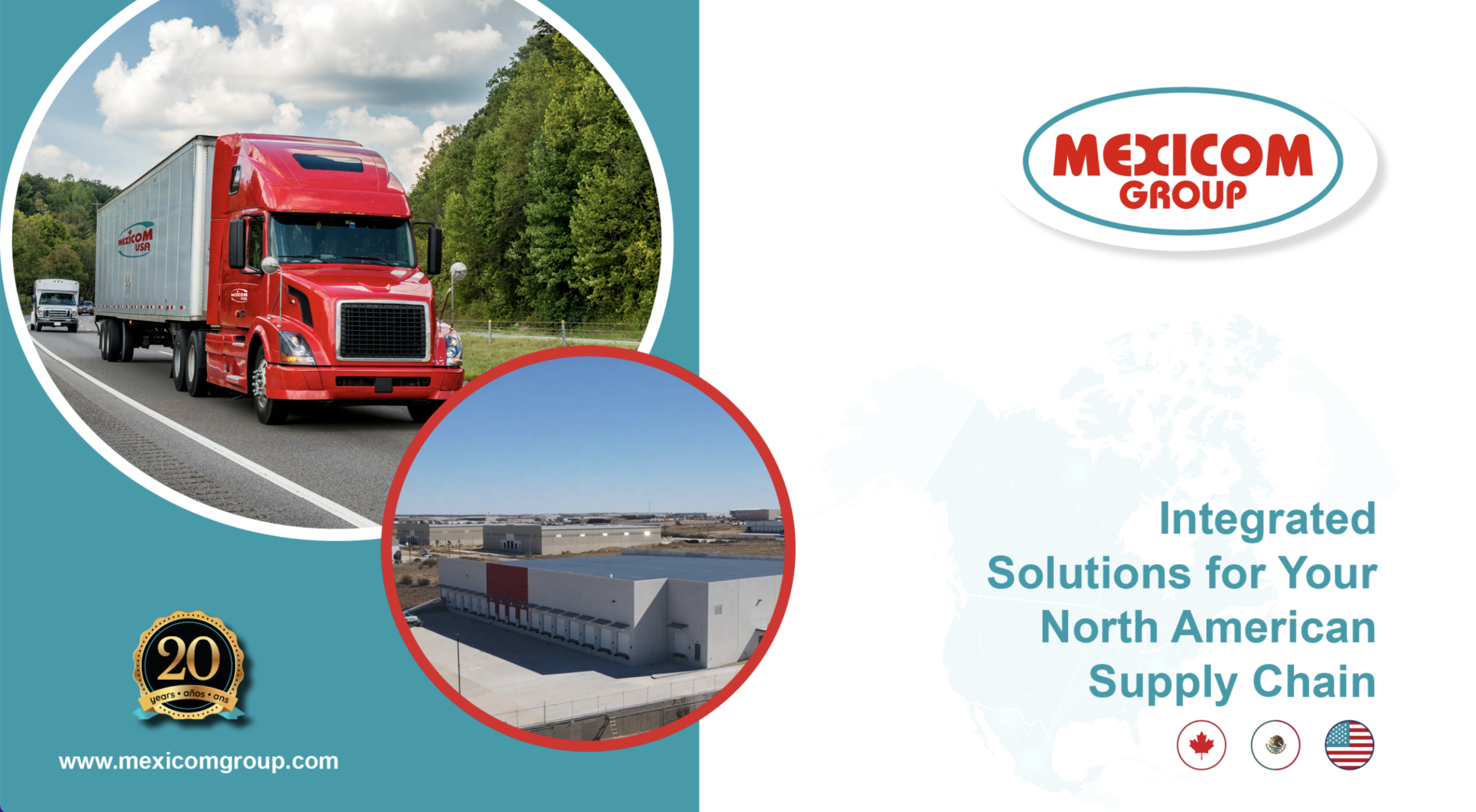


Freight Trends in 2026: What Businesses Shipping Between Mexico and Canada Need to Know
Shipping freight between Mexico and Canada is entering a new era in 2026. While trade between the two countries remains strong, companies must navigate tightening trucking capacity, changing tariff landscapes, and evolving trade policies, all of which influence freight rates and logistics strategies.
According to a major North American logistics provider, “Shippers have benefited from largely favorable trucking conditions for several years—even during this year’s peak season. Many of our customers haven’t seen a tight market in quite some time.”¹ This makes understanding trends and preparing for shifts in capacity and rates more important than ever.
Here’s a detailed look at the key trends, factors to watch, and rate expectations for 2026.
Freight Trends in 2026: Mexico → Canada
What businesses shipping between Mexico and Canada need to know
1. Tight Trucking Capacity
Trucking supply is expected to tighten in 2026 due to rising costs and stricter regulations. Businesses should plan ahead for truck availability, especially for specialized equipment.
2. Demand Will Not Spike
Overall freight volumes are not expected to rise sharply. But specific industries like produce and refrigerated goods may face tighter capacity.
3. Specialized Equipment Tightens First
Temp-controlled and flatbed capacity is expected to tighten sooner than dry vans. Plan shipments early for refrigerated goods.
4. Higher Compliance Requirements
Increased licensing and documentation rules will affect owner-operators and cross-border logistics. Expect more scrutiny at border crossings.
5. Rates Expected to Rise Moderately
Trucking rate increases are expected as capacity tightens and demand rebalances. Prepare for modest increases in 2026.
6. Strategy: Plan Early
“Prepare now to ensure you have the right capacity where and when you need it.” Advance planning is key to avoid delays and higher costs.
1. Tighter Trucking Supply: Capacity Constraints Ahead
The trucking industry in North America is expected to face tighter supply in 2026 due to several converging factors:
-
Fewer carriers entering the market: Operational costs for carriers continue to rise, discouraging new entrants.
-
Regulatory tightening: Stricter rules on driver licensing, work visas, and training programs are expected to reduce capacity, particularly among owner-operators, who make up the majority of U.S. trucking firms.
-
Equipment-specific trends: While truckload (dry van) capacity may normalize by mid-2026, specialized equipment like temp-control and flatbed trucks may see tighter availability sooner.²
Example: Companies shipping refrigerated goods from Mexico to Canada should plan ahead to ensure truck availability during Q2 produce season, as limited temp-control trucks could drive up rates.
Advice: “Prepare now, to ensure you have the right capacity where and when you need it,” advises the same logistics provider’s North American Surface Transportation team.³
2. Demand Signals: Industry-Specific Insights
While supply may tighten, overall freight volumes are not expected to spike dramatically in 2026. However, certain sectors will continue to influence cross-border flows:
-
Retail and consumer goods are expected to be modest as inventory reloads remain cautious.
-
Food and beverage industries may see smaller orders due to shifting consumption patterns.
-
Growth in housing construction could boost freight volumes if interest rates fall, as each new home generates multiple truckloads of materials.
-
Strong manufacturing activity in Mexico — particularly in tech and machinery — continues to drive freight northward through U.S. gateways like El Paso, Texas.¹
Example: A manufacturer in Monterrey may have greater opportunities for cross-border trucking to Canada as demand grows, but advance planning is still critical to avoid peak season capacity constraints.
3. Trade Policy and Tariff Volatility
Trade policy continues to play a major role in freight planning and rate dynamics:
-
USMCA/CUSMA Review: The 2026 joint review may create short-term uncertainty in tariffs, rules of origin, and enforcement measures, which could affect Mexico–Canada freight flows.
-
Current tariff environment: A recent industry webinar on tariff trends highlighted that headline tariff proposals do not always translate directly into realized duties, due in part to exemptions, carve-outs, and delayed implementations. It was noted that while tariffs are likely to continue, some proposals are being restrained compared to earlier rhetoric.⁴
-
Enforcement emphasis: Customs authorities are expanding auditing and inspection efforts, particularly around valuation, tariff stacking, and origin claims under USMCA, which could lead to increased compliance costs even when duties are ultimately low or waived.⁴
-
Canadian trade policy context: Counter-tariffs, protective measures such as tariff rate quotas on steel products, and new global tariffs on certain derivatives are part of the evolving trade landscape for Canada–Mexico–U.S. cross-border commerce.⁵
Example: A Canadian importer of Mexican steel components must stay updated on both U.S. and Canadian tariff enforcement actions to better forecast landed costs and avoid unanticipated fees.
4. LTL vs FTL: Rate Implications
Tightening truckload capacity has ripple effects for less-than-truckload (LTL) shipments:
-
LTL networks saw a decline in capacity after major carriers exited the market.
-
As truckload capacity tightens, smaller shipments are increasingly absorbed into LTL networks.
-
Mid-single-digit rate increases are expected for LTL services even in a relatively soft freight market, consistent with historical pricing patterns.²
Example: A small electronics distributor shipping a few pallets from Mexico City to Toronto may experience higher LTL rates as carriers adjust to the shifting mix of truckload and LTL demand.
5. Projected Rate Trends for 2026
Industry forecasts show:
-
Modest overall rate increases of approximately 4–6% year-over-year, reflecting the interplay of capacity contraction and seasonal demand shifts.²
-
Spot rates are likely to influence contractual rates as the market transitions toward equilibrium.
-
Traditional seasonal patterns still hold: rates typically soften in Q1 after year-end peaks but rise again in Q2 with produce and beverage seasons — starting from a higher baseline in 2026 than in previous years.²
Example: A beverage company shipping from Veracruz to Montreal may see slightly higher rates in Q2 due to limited refrigerated truck availability combined with seasonal demand.
6. Factors to Watch That Will Impact Freight Rates
Several variables are expected to shape freight rate behaviour in 2026:
-
Regulatory enforcement: Expanded border inspections and stricter licensing can constrain capacity.
-
Tariff and trade changes: Ongoing tariff programs and adjustments under trade agreements influence cost planning.
-
Fuel and operational costs: Surcharges tied to fuel and labour continue to be integral to pricing.
-
Seasonality and inventory cycles: Peaks in retail, agriculture, and manufacturing can tighten capacity.
-
Technology adoption: AI-enabled logistics systems — including accelerated quoting, carrier matching, and automated documentation — can reduce delays, optimize routing, and help companies react more quickly to capacity shifts. A webinar participant observed that such tools help “offset cost pressures and increase your speed to market in any environment… The faster you get a quote, the faster your order is processed.”⁴
7. Strategic Advice for Shippers
To navigate these trends:
-
Book capacity early — especially for specialized equipment like refrigerated and flatbed.
-
Monitor trade and tariff developments — leverage up-to-date sources and market signals.
-
Diversify modes — evaluating alternatives and consolidation points can reduce exposure to capacity bottlenecks.
-
Leverage technology — real-time tracking, automated quoting, and visibility platforms enhance planning and responsiveness.
-
Plan for LTL volatility — build lead time into scheduling for shipments with unpredictable demand patterns.
In 2026, businesses shipping freight between Mexico and Canada face both opportunities and challenges:
-
Opportunities: Strong bilateral trade, growth in manufacturing sectors, nearshoring momentum, and expanded warehousing infrastructure.
-
Challenges: Trucking capacity tightening, evolving trade policy, tariff volatility, and shifts in both FTL and LTL markets.
Understanding these trends and monitoring key economic and policy indicators will help companies strategically plan shipments, optimize costs, and maintain smooth cross-border operations in 2026.
Frequently Asked Questions
What are the main factors affecting freight shipping between Mexico and Canada in 2026?
How do FTL and LTL rates differ for Mexico–Canada shipments?
How can businesses optimize shipping costs between Mexico and Canada?
What are the documentation requirements for Mexico–Canada cross-border freight?
How does trade policy impact shipping between Mexico and Canada?
Can AI and technology help improve Mexico–Canada shipping efficiency?
Which industries will influence freight trends between Mexico and Canada?
How do I get an accurate quote for shipping from Mexico to Canada?
References
-
C.H. Robinson, “North American Surface Transportation 2025–2026 Edge Report”
-
C.H. Robinson “North American Surface Transportation 2025–2026 Edge Report” (capacity and rate projections)
-
C.H. Robinson North American Surface Transportation team insights (capacity advice)
-
Flexport, “Tariff Trends 2026” webinar (Marcus Eeman & Jenn Park)
-
Fasken, International Trade and Investment Law Bulletin, January 15, 2026